If you’re running an independent insurance agency, your email list is one of the most reliable tools in your marketing toolbox. It helps you stop fighting algorithms, reduce ad spend, nurture new prospects, stay connected with existing customers, and naturally cross-sell additional lines of business.
If you want help setting this up the right way, this is exactly what we do at Go Stack Media. We help businesses create email collection systems that feel natural, compliant, and actually convert. If that sounds helpful, reach out anytime.
Here’s the challenge most insurance agencies run into: your website gets visitors, but they leave without taking action. Maybe they’re “just looking.” Maybe they’re not ready to request a quote. Or maybe they don’t understand why they should reach out yet.
Meanwhile, social media feels unpredictable, paid ads get expensive fast, and staying top-of-mind between renewals is harder than it should be.
I used to be an independent insurance agent, so I know how awkward email marketing can feel at first. You don’t want to be pushy. You don’t want to annoy people. You just want a simple, compliant way to collect emails from your website visitors and turn them into real relationships.
This guide walks you through proven ways to collect email addresses, why they work, and how to set them up using tools like OptinMonster, which is what I personally use on my sites.
How to Collect Emails (Without Being Spammy)
Before we get into tools and tactics, let’s set expectations.
People will not always give you their email addresses just because you ask. Email collection works when there’s a clear benefit, a strong call to action, and a simple form that respects users’ time.
Your goal is not to grab as many emails as possible. Your goal is to collect emails from the right potential subscribers so your email marketing campaigns actually perform (convert).
1. Opt-in Popups (Done the Right Way)
Pop-ups get a bad reputation, but they remain one of the highest-converting email collection methods when used correctly.
Welcome popups
These appear when users first arrive on your website. A simple welcome popup with a clear sign-up option can introduce your brand and explain what subscribers will get.
Educational Offer Popups
While insurance agencies can’t offer discount popups the way ecommerce businesses do, you can still use this space very effectively.
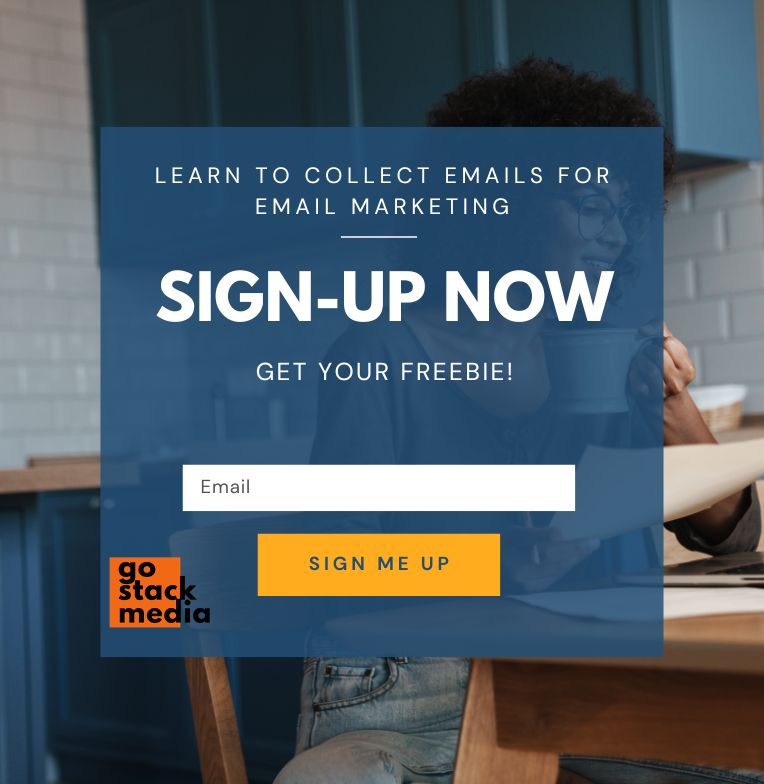
Instead of a discount code, use an educational offer that solves a real problem your prospects are already worried about. A popup can invite visitors to sign-up for:
- A how-to guide on keeping insurance premiums low
- A checklist of insurance discounts or credits people commonly miss
- A “what to review before your next renewal” checklist
- A short guide explaining coverage options in plain English
This approach works because it keeps you compliant, builds trust, and positions your agency as a helpful resource. You’re not pushing a sale. You’re offering clarity, which makes people far more willing to share their email address.
Exit-intent popups
Exit intent pop-ups trigger when someone is about to leave the page. Again, these work incredibly well with ecommerce for capturing emails from window shoppers who weren’t quite ready to buy.
Tip: I’m personally a big fan of the welcome popup/educational offer combo. It lets you start the relationship on your terms instead of catching someone on their way out.
For insurance agents especially, this feels more natural. If you do use exit intent targeting, focus on education instead of incentives.
2. Embedded Signup Forms
Embedded signup forms live directly on your blog page instead of interrupting the experience.
You’ll often see these:
- Inside a blog post
- At the bottom of a page
- In the footer of a website
An embedded email signup form works best when it matches the content around it. If your blog post solves a problem, offer a related free guide or exclusive content.
Tip: While I think an embedded sign-up form is a nice-to-have, I’m a bigger fan of a pop-up. Think of it this way, what is marketing? It’s an interruption. You need to grab someone’s attention and a pop-up is a polite way to interrupt. Think… like what we’re doing? Subscribe for more of the good stuff.
3. Onsite Notifications and Bars
Notification bars sit at the top or bottom of a page and promote sign-ups.
They’re ideal for:
- Announcing something your office is putting on like a golf tournament or a customer appreciation day
- Promoting email campaigns
- Offering early access to a new product
Because they’re subtle, they don’t hurt the user experience and can still help gather email addresses consistently.
4. Personalized Landing Pages
A landing page is a focused page with one job. In this case, it’s email collection.
Here’s how it usually works in real life. Someone is scrolling on social media or searching on Google. They see an ad or a post that speaks to a specific problem they’re dealing with. They click it, and instead of landing on your full website, they’re taken to a dedicated landing page where there’s only one thing to do: sign-up.
That’s it. No menus. No extra links. No distractions.
This approach works especially well for:
- Paid marketing campaigns
- Traffic from social media platforms
Because everything on the page supports one clear call to action, users don’t have to think.
5. Free Webinars, Consultations or Policy Reviews
Service-based businesses often overlook this. You’re thinking “I always offer this for free. It’s always free.” But your prospect may not necessarily know that if you don’t tell them. You think they should assume it. They don’t. And if you say it, they may think if no one else is saying it, it must not usually be free.
A free webinar, audit, or consultation builds trust and starts the customer relationship on the right foot. It’s also a natural way to capture emails from potential customers who already have intent.
6. Lead Magnets That Actually Convert
This is another term for “freebie”. Lead magnets are one of the most effective ways to collect emails.
Examples that work:
- Free guide
- Checklist
- Templates
The key is relevance. A generic freebie won’t convert. A specific lead magnet tied to your target audience will.
7. Interactive Quizzes
Quizzes feel fun and personal. They’re great for building a personal connection while gathering emails.
At the end of the quiz, ask for an email address to deliver results or personalized recommendations.
8. Carrier Notifications
Carrier notifications are one of the easiest and most overlooked ways to collect emails in the insurance space.
When someone is actively shopping for coverage, timing matters. Offering a sign-up option to find out when new carriers come to the market or to stay informed about insurance changes that could affect them gives people a real reason to subscribe.
Think:
- New carriers entering your state
- Coverage or underwriting changes
- Rate shifts that could impact premiums
These updates position you as a helpful resource, not a salesperson, and they naturally turn interested users into email subscribers who actually want to hear from you.
What Happens After You Capture the Email?
Collecting an email address is just the beginning. What you do next is what separates agencies that build long-term relationships from those that get ignored.
For independent insurance agencies, email marketing isn’t about blasting promotions. It’s about guiding people through each stage of the relationship, before and after they ever become a client.
1. Nurture the Relationship Before They Become a Client
Before someone buys a policy, they’re trying to make sense of a complicated decision. This is where email shines.
Use your early emails to:
- Explain coverage basics in plain language
- Share common mistakes people make when shopping for insurance
- Introduce your team
This builds trust before a quote is ever requested. You’re not chasing the sale. You’re positioning yourself as the helpful expert they’ll remember when they’re ready.
2. Educate New Clients After the First Policy Is Written
Once someone becomes a client, your emails should shift from “why insurance matters” to “how to use it correctly.”
This is a great time to:
- Answer questions you hear every day on the phone
- Offer general coverage comparisons like HO3 vs HO5
- Are you located in a market with natural disasters? Talk about “name-of-event preparedness”
- Walk through claims basics and what to do if something happens
These emails reduce confusion, lower service calls, and reinforce that they made the right decision choosing your agency.
3. Prepare Clients for Renewal (Without Risky Reminders)
Renewals can be tricky from an E&O standpoint, so instead of formal renewal reminders, focus on education.
Share tips that help clients think proactively, such as:
- Have you made home improvements or renovations?
- Added a driver or bought a new car?
- Purchased jewelry, equipment, or other high-value items?
- Started working from home or changed how a vehicle is used?
This approach encourages clients to review their coverage without putting your agency in a risky position. It also opens the door for meaningful conversations, not just price shopping.
4. Cross-Sell to Create Sticky, Long-Term Clients
Cross-selling isn’t about pushing products. It’s about rounding accounts in a way that actually benefits the client.
If someone has:
- Home but not auto
- Auto but no umbrella
- No life insurance on file
Email is the perfect place to educate them on why bundling matters and how it can simplify their coverage.
From a business perspective, this is huge. It’s far more cost-effective to deepen relationships with existing clients than to constantly chase brand-new accounts. From the client’s perspective, having more coverage with one trusted agency makes life easier.
That’s how you create a sticky client effect and long-term retention.
How OptinMonster Makes This Easier
OptinMonster is one of the most powerful tools for email collection because it lets you:
- Create pop-ups, slide ins, and embedded forms
- Target users based on behavior
- A/B test different forms and calls to action
- Improve conversion rates without redesigning your website
Start Turning Website Visitors Into Long-Term Clients
Collecting emails for email marketing isn’t about blasting newsletters or sending salesy messages. For insurance agencies, it’s about building trust before a quote, staying helpful after the sale, and creating real relationships that last beyond one policy term.
When your email strategy is set up the right way, it supports every stage of the client journey. You nurture prospects who aren’t ready yet. You educate new clients so they feel confident in their coverage.
And you naturally cross-sell by rounding accounts, which is far more cost-effective than constantly chasing new business.
If you want help building an email collection system that actually fits how insurance agencies work, that’s exactly what we do at Go Stack Media. We design compliant, conversion-focused forms, landing pages, and email strategies that feel human, not pushy.
If you’re ready to turn your website into a lead-building and relationship-building tool, let’s talk. We’ll help you create something intentional, effective, and built for your agency, not a one-size-fits-all template.